

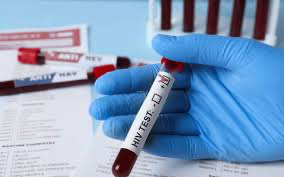
The small Pacific nation of Fiji is currently grappling with a health crisis after declaring a national HIV emergency in the country, with reports that one in every 60 persons is infected with the virus.
The island’s Health Minister, Dr Atonio Lalabalavu, made the formal declaration of the public health crisis in the country during a pre-recorded video press statement on Tuesday, as per RNZ Pacific.
Dr Lalabalavu said the decision had the support of Prime Minister Sitiveni Rabuka and his Cabinet, given the “seriousness of the epidemic”.
During his statement, the Health Minister confirmed the crippling figures of current government estimates that one in every 60 adults in Fiji is living with HIV.
“Five years ago, the estimate was one in 167. In 2025, we recorded 2060 new HIV diagnoses,” he said.
“HIV prevalence among women attending antenatal care reached around two percent. That means one out of 50 pregnant women now has HIV. These figures tell us the response must reach further and follow through more consistently.”
According to the World Health Organisation (WHO), Fiji has one of the fastest-rising HIV epidemics in the Asia-Pacific region, along with Papua New Guinea (PNG) and the Philippines.
“An estimated 9000 Fijians were living with HIV as of March this year, and officials pointed to high-risk drug use contributing to the rapid rise,” RNZ reports.
Dr Lalabalavu expressed that every diagnosis must result in the requisite care and support needed following the discovery and the treatment.
He added that new interventions supported by research are being accelerated and scaled up for rollout by authourtites
“That means expanding testing, treatment, and access to pre-exposure prophylaxis, or PrEP. It also means accelerating the introduction of a formal needle and syringe programme and long-acting injectable prevention.”
“It helps people living with HIV stay well, and when it achieves and maintains an undetectable viral load, it prevents sexual transmission.”
Dr Lalabalavu said Australia, New Zealand, the Global Fund, India, and the United Nations Joint Team on HIV and AIDS, and other partners are supporting the country with its HIV response.